
APQ Technology
For optical and mechanical manufacturing, we work with leading precision-instrument manufacturers.
Our manufacturing model combines small-batch production, one-off builds, and custom work using both conventional processes and modern CNC technology.
Our core technology and manufacturing principles include:
Precision machining of all components
State-of-the-art metrology and testing
Final system correction by a master optician
- Optical Manufacturing
- Mechanical Manufacturing
- Refinements
- APQ Wiki
Spherical, aspherical and plano optical components are precision-machined in close cooperation with our regional manufacturing partners.
Alongside conventional machine-based and manual optical fabrication, high-precision CNC equipment is used for rough grinding, fine grinding, polishing (e.g., OptoTech PPM 301 CNC) and centering.
Continue reading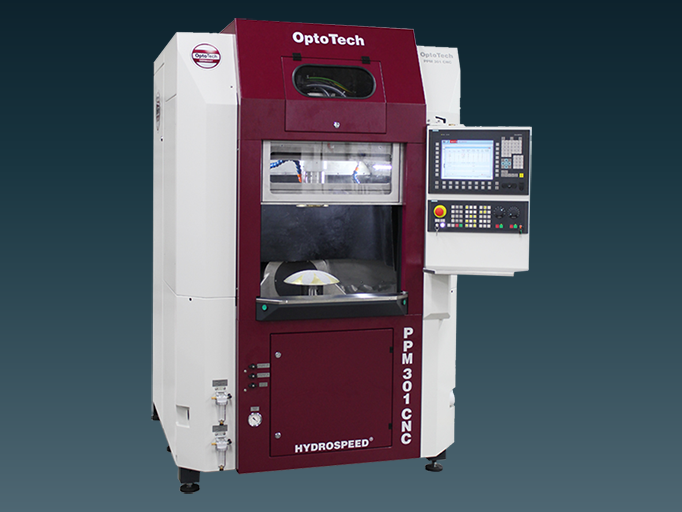
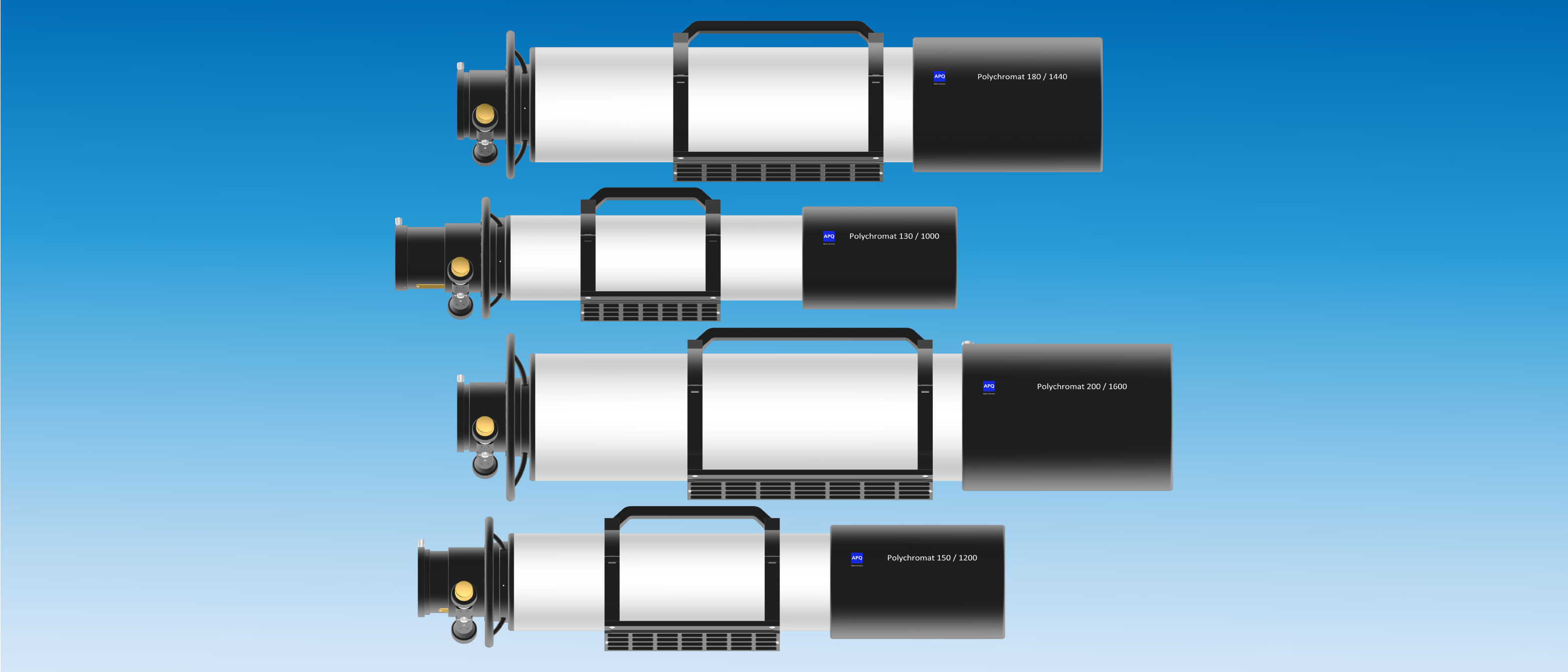
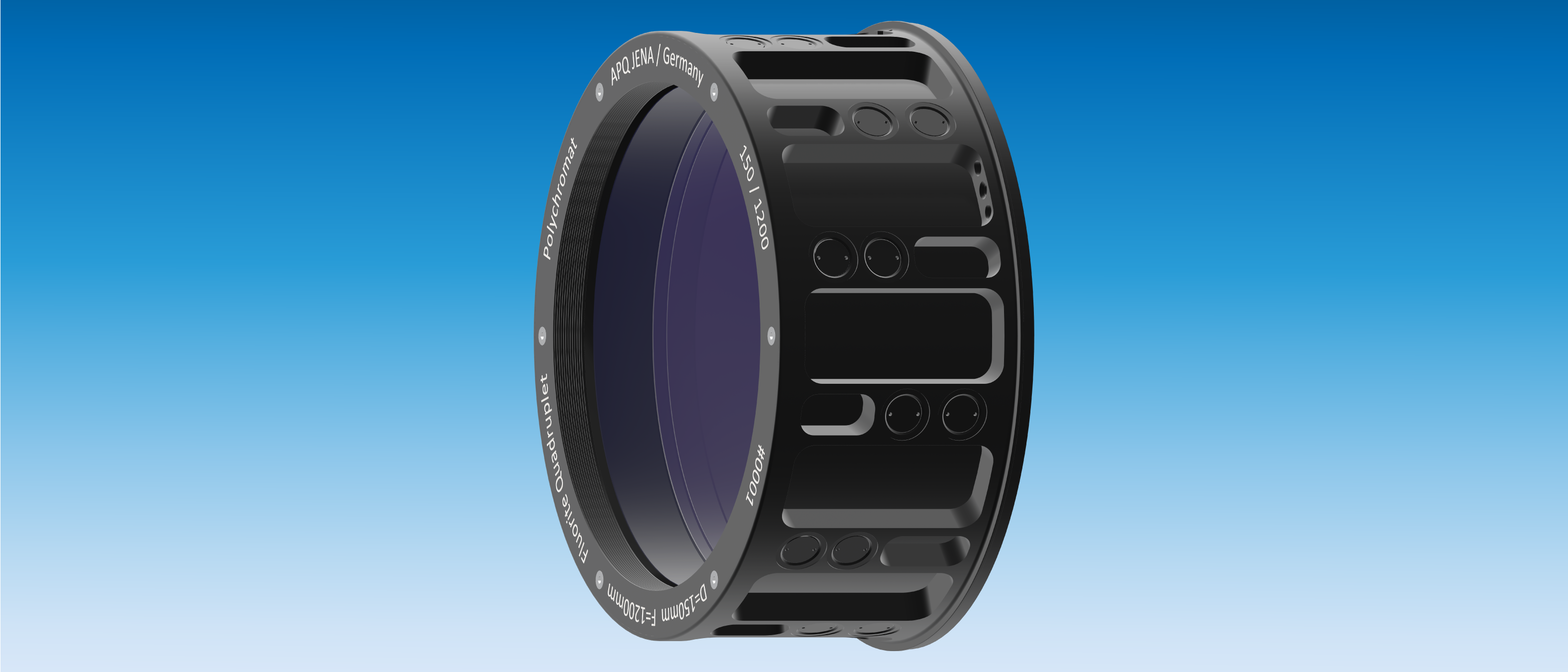
Mechanical parts and assemblies, including lens cells and telescope tubes, are manufactured by selected regional partners.
Our manufacturing partners use both conventional machine tools and modern CNC machining centers.
Continue readingOptimized compensation lens cell
The thermally compensated lens cell has been further optimized. This has reduced the cell weight by an additional 0.15 kg without compromising mechanical stability or the proven thermal compensation.
More about the compensation lens cell
Advanced collimation concept
The collimation concept has also been refined. The new solution supports even more precise and reproducible alignment of the optical system while maintaining long-term stability. Further design details will be published at a later date.
Improved quick-change system
An additional clamping ring allows the quick-change system to be aligned precisely to the required position angle and then securely locked. The new design also increases the mechanical stiffness of the connection, particularly for complex imaging setups.
The APQ APQ Wiki explains key terms used in optical design, optical and mechanical manufacturing, and astronomical applications.
Complementary technologies and custom optical systems at Drei Gleichen Engineering