APQ 110/550 Fluorite Wide Field Polychromat
UBVRI Fluorite Wide Field Polychromat
Ten-element aspheric design
3 CaF₂ lenses
Final system correction by a master optician
Oil-spaced with air gaps
Ultra-broadband anti-reflection coating
Compensation cell
Collimatable optical system
Integrated special focal reducer corrector
Retractable and lockable dew cap
Feather Touch Focuser FTF3545
Ø67.4 mm unvignetted image field suitable for full-frame, IMX461 and IMX411 CMOS cameras
Compact travel-ready dimensions
High imaging performance for astronomy and nature observation
excl. shipping costs
incl. 19 % VAT
excl. shipping costs
excl. shipping costs
excl. shipping costs
APQ Optical System 110/550 WF Polychromat with optical inspection certificate
APQ Tube Assembly 110/550
APQ Dust Cover for dew cap
Feather Touch Focuser FTF3545
APQ Quick Changer S88
APQ Dust Cover for Quick Changer
incl. 19 % VAT
excl. shipping costs
excl. shipping costs
excl. shipping costs
excl. shipping costs
- Description
- Specification
- Recommended Accessories
- Applications
- Downloads
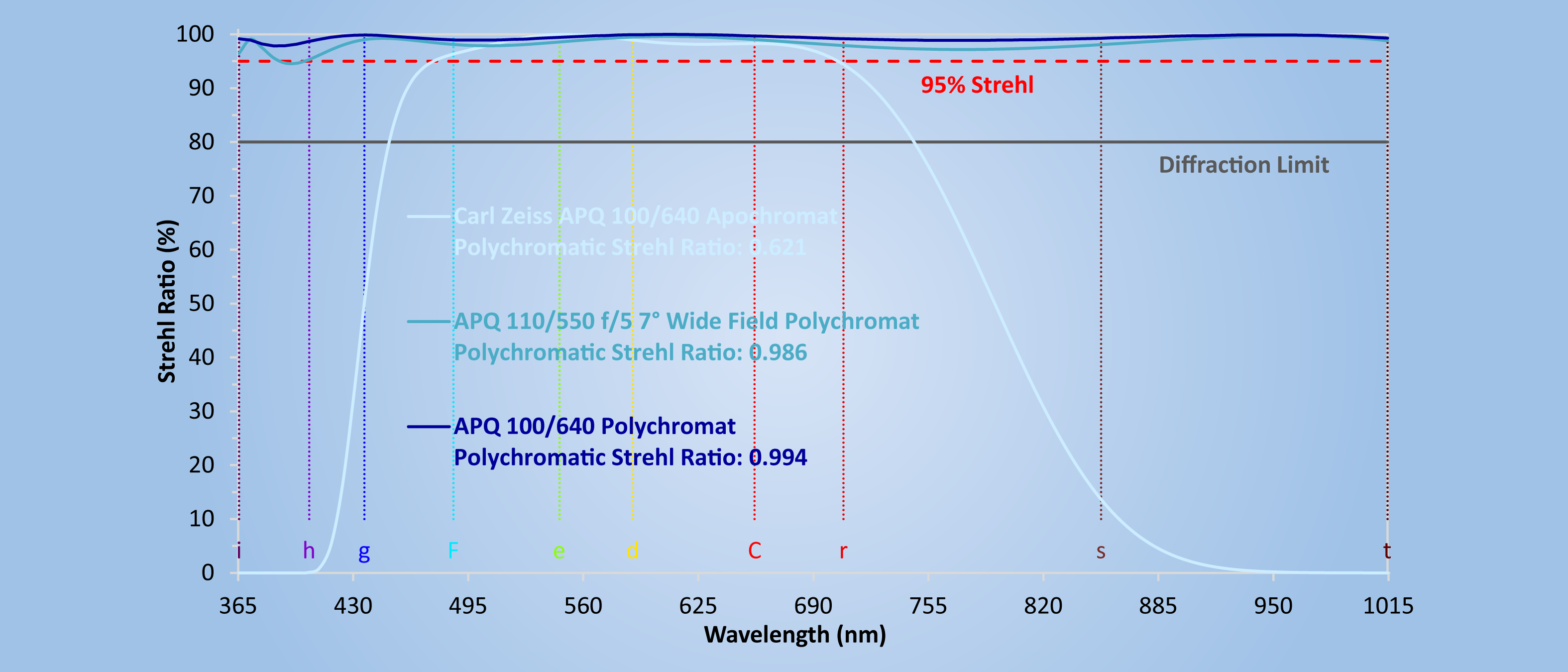
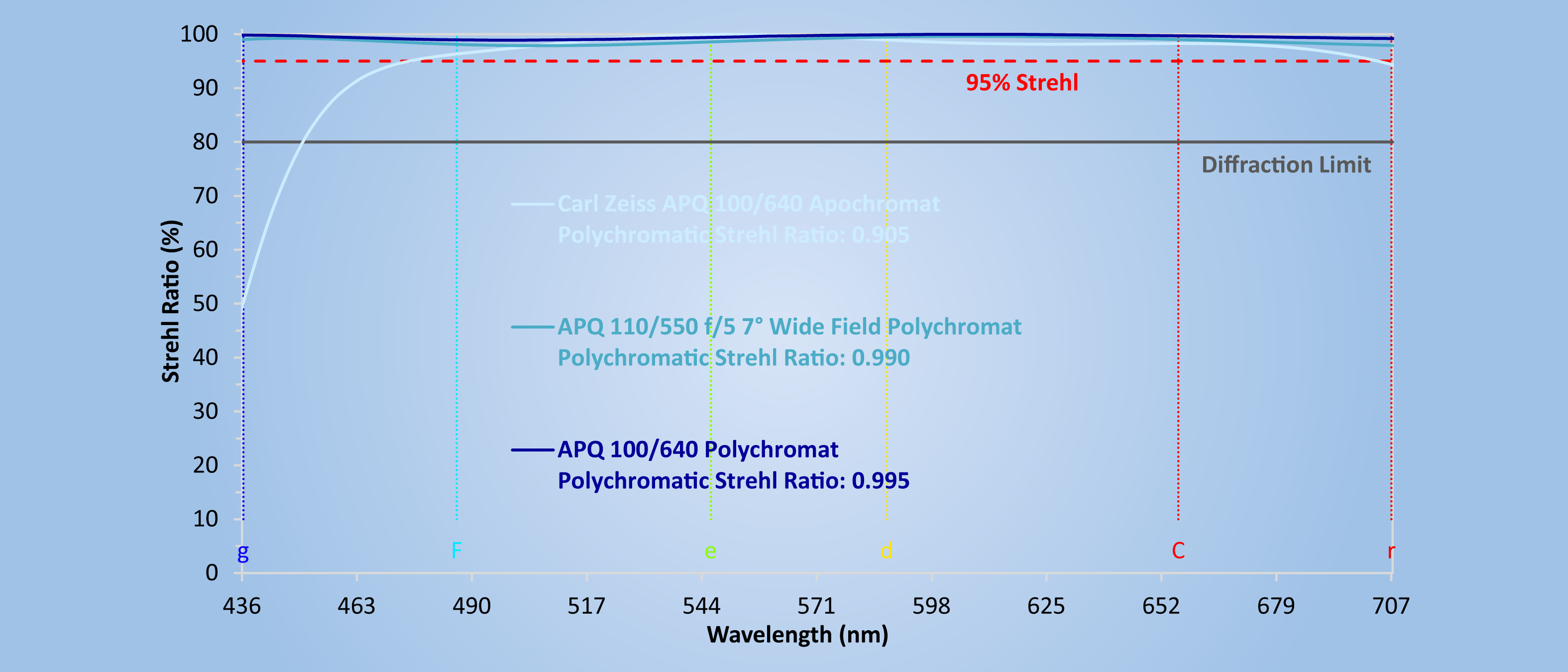
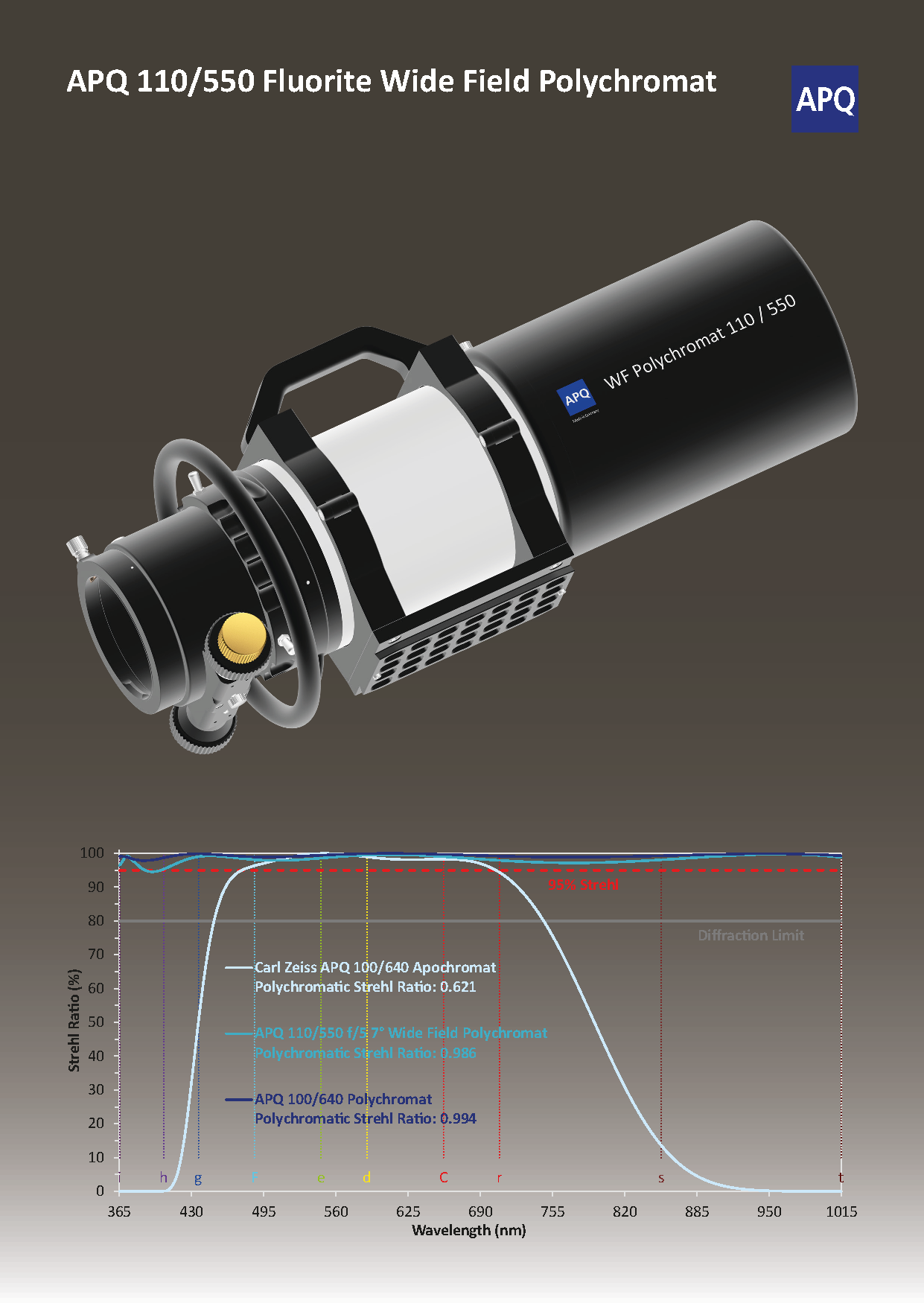
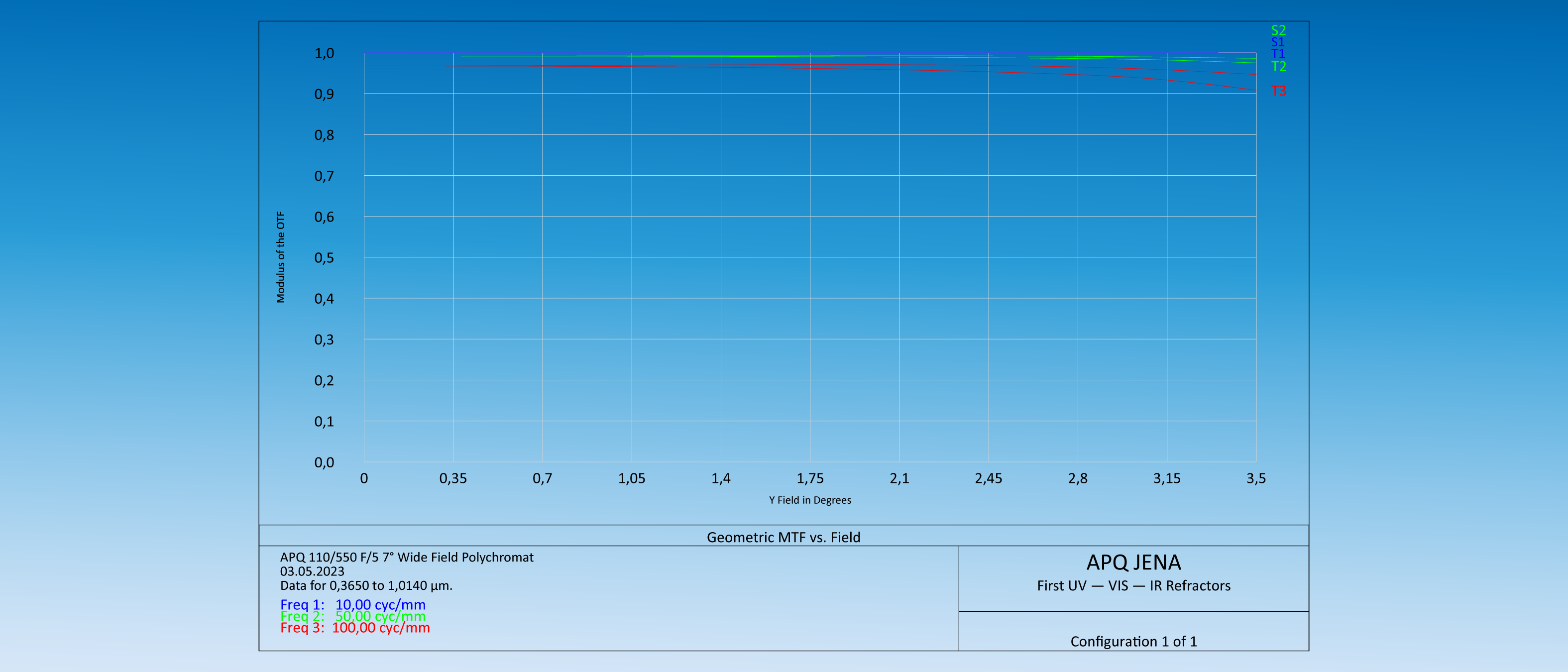
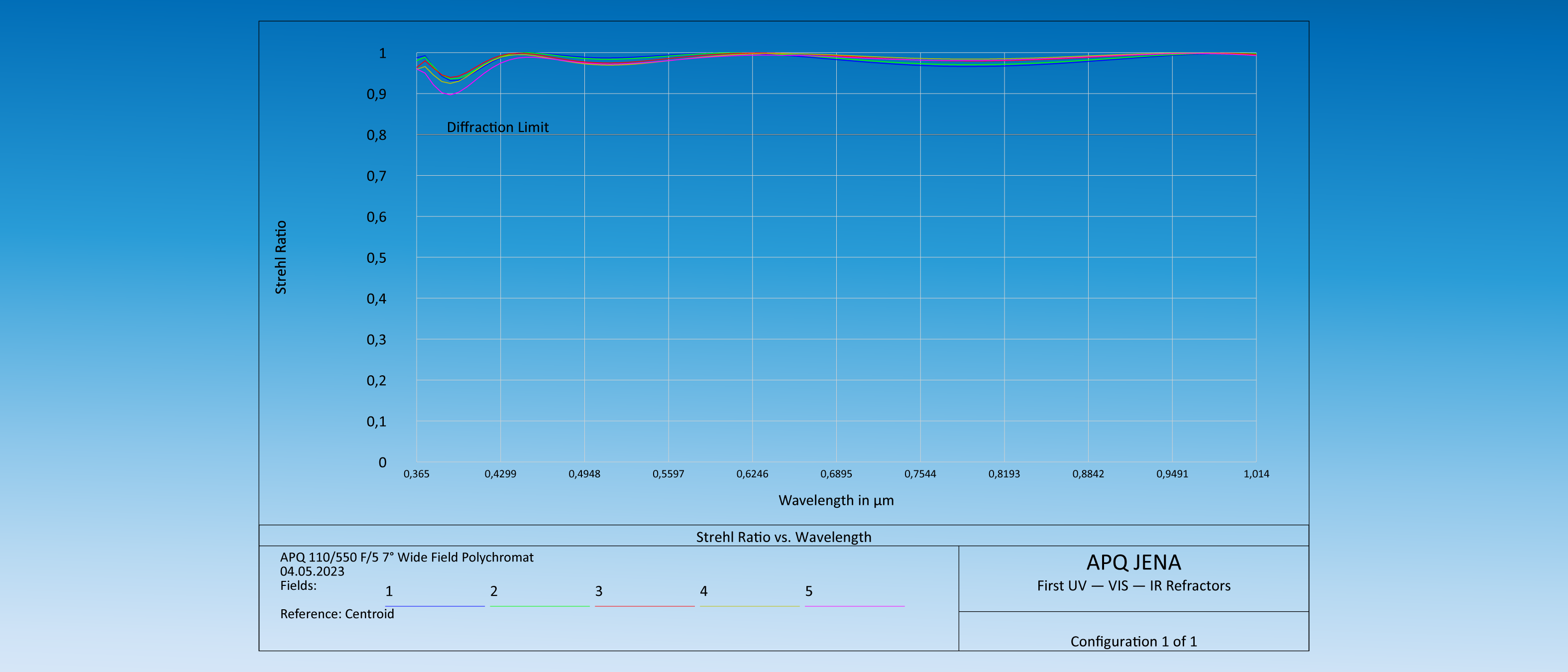
The APQ 110/550 Fluorite Wide Field Polychromat shows no drop in Strehl ratio toward or below the diffraction limit at the edges of the visual spectrum, unlike most apochromats.
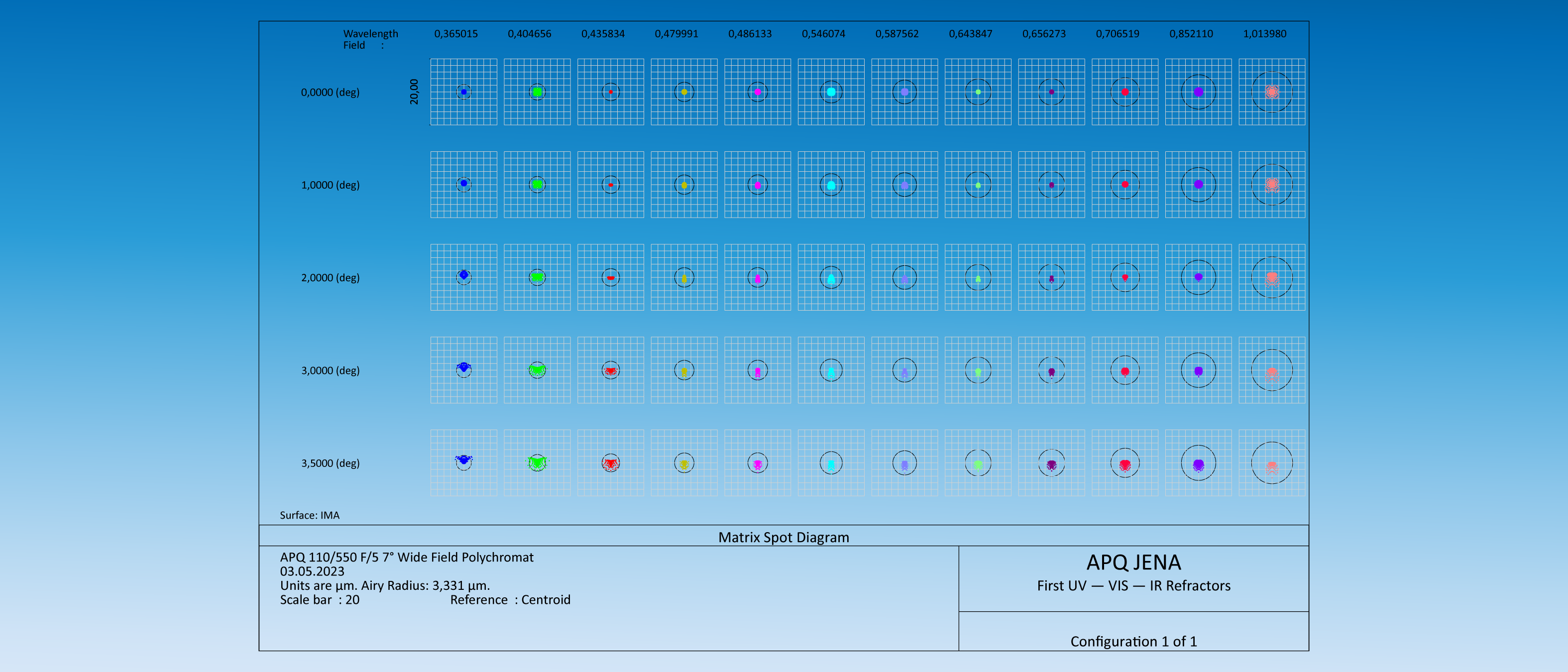
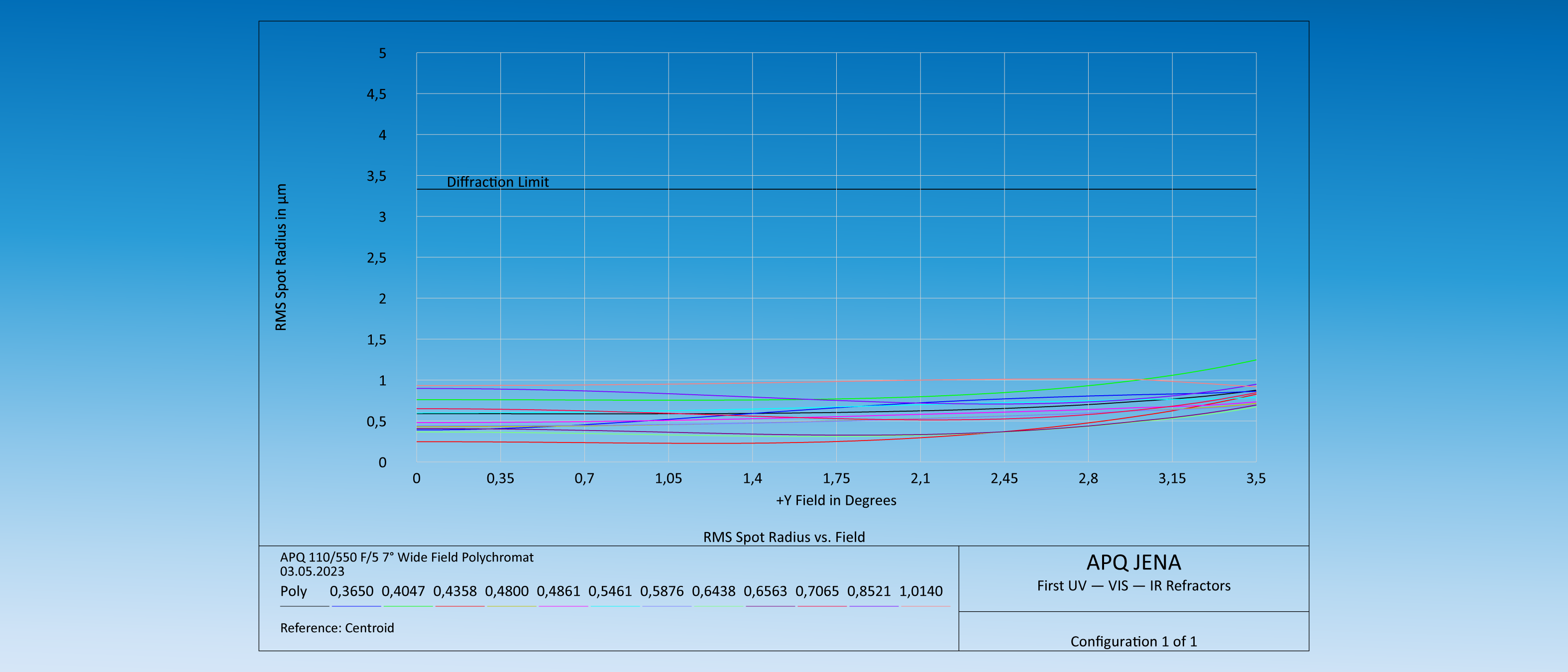
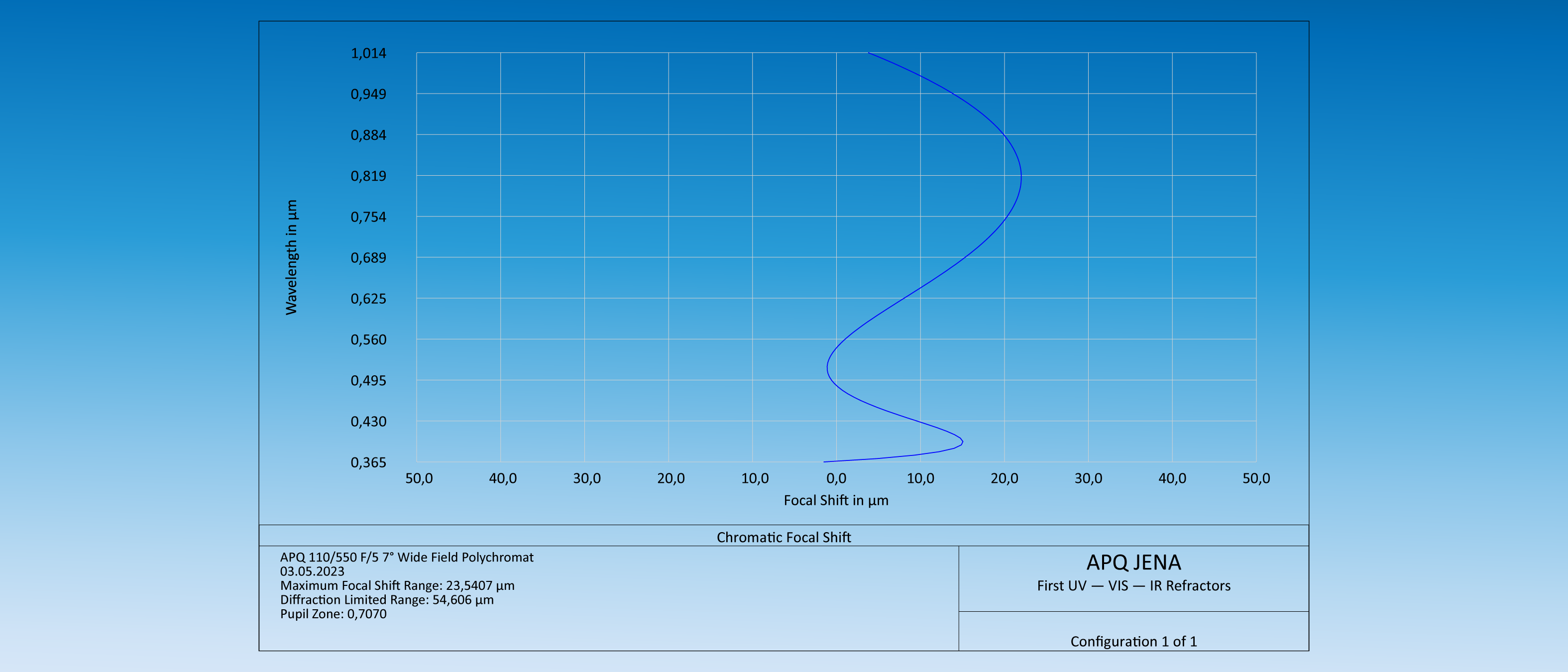
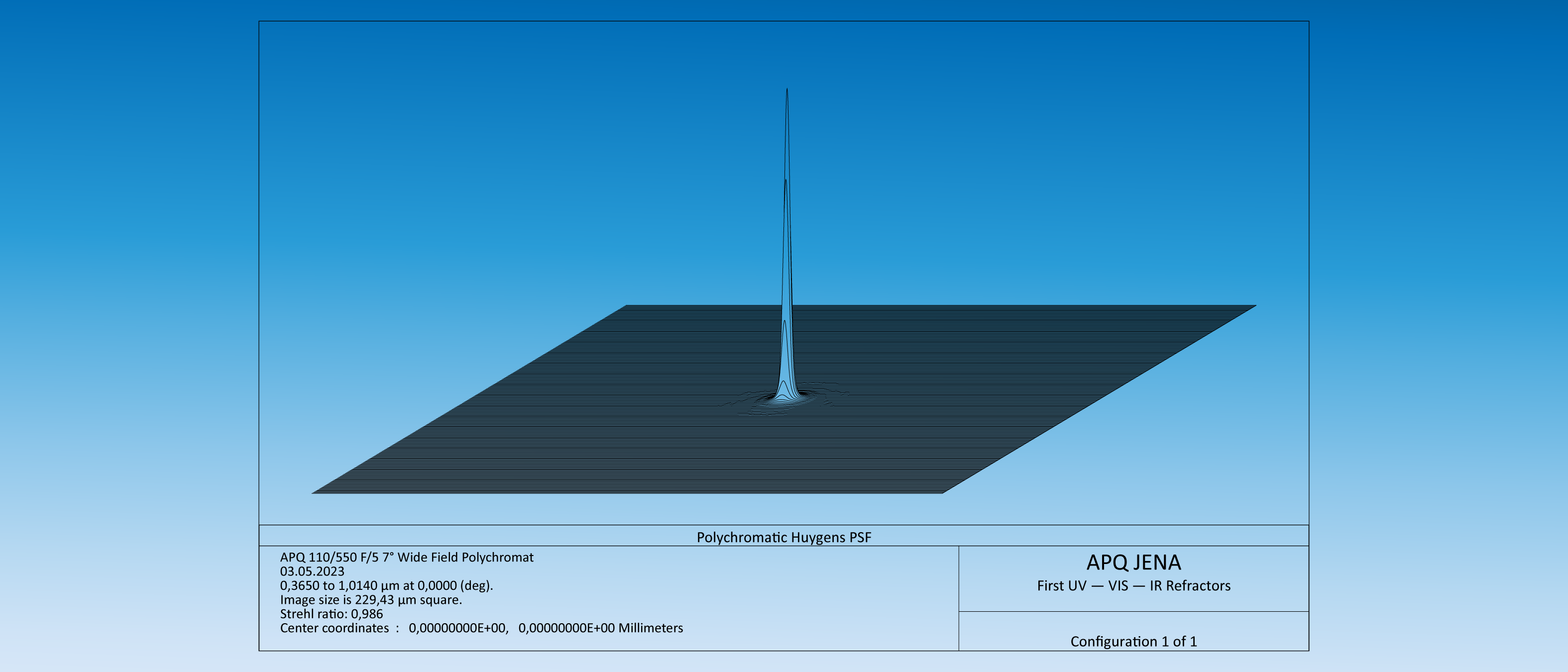
Thanks to its polychromatic correction, the ten-element CaF₂ optical system of the APQ 110/550 maintains diffraction-limited resolution to the edge of the unvignetted Ø67.4 mm image field (IMX411 image diagonal: 66.7 mm), while utilizing the full UBVRI spectral range (365 nm – 1014 nm) of modern electronic sensors (CCD, CMOS).
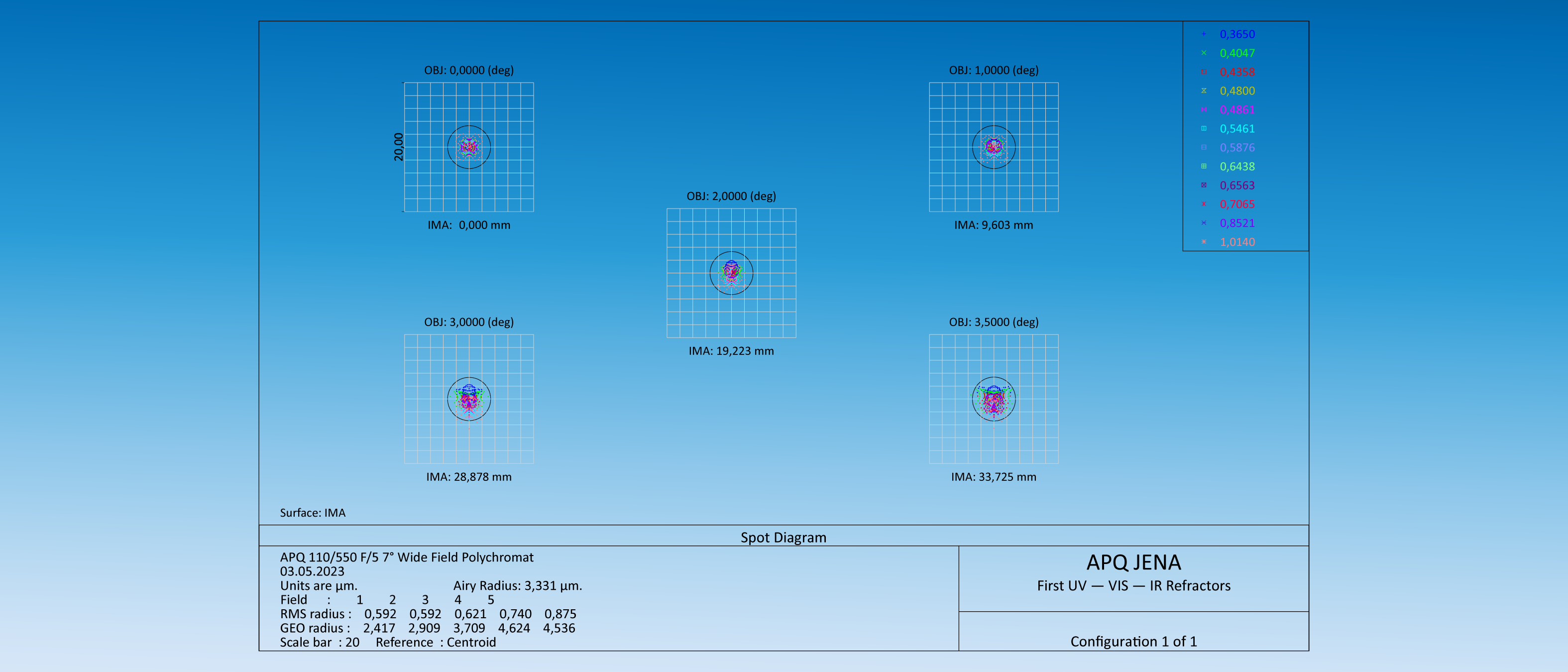
Across the entire 365 nm to 1014 nm spectral range, the RMS spot radius remains well within the Airy-disk diameter even at the edge of the Ø67.4 mm image field.
We source specially specified, high-quality fluorite blanks from a certified manufacturer that also supplies CaF₂ raw material to leading precision optics manufacturers for stepper lenses used in VUV photolithography.
The surfaces of the optical elements, made from three different special optical glasses from SCHOTT® or OHARA® and CaF₂, are precision machined; one lens surface is aspheric.
Because every manufacturing process has finite precision, even state-of-the-art CNC machining is subject to tolerances. All manufacturing parameters must therefore be carefully specified and toleranced.
A final system correction by a master optician with decades of experience ensures the required high image quality.
A newly developed compensation cell ensures that the elements of the oil-spaced optical system with air gaps remain securely positioned as the temperature changes.
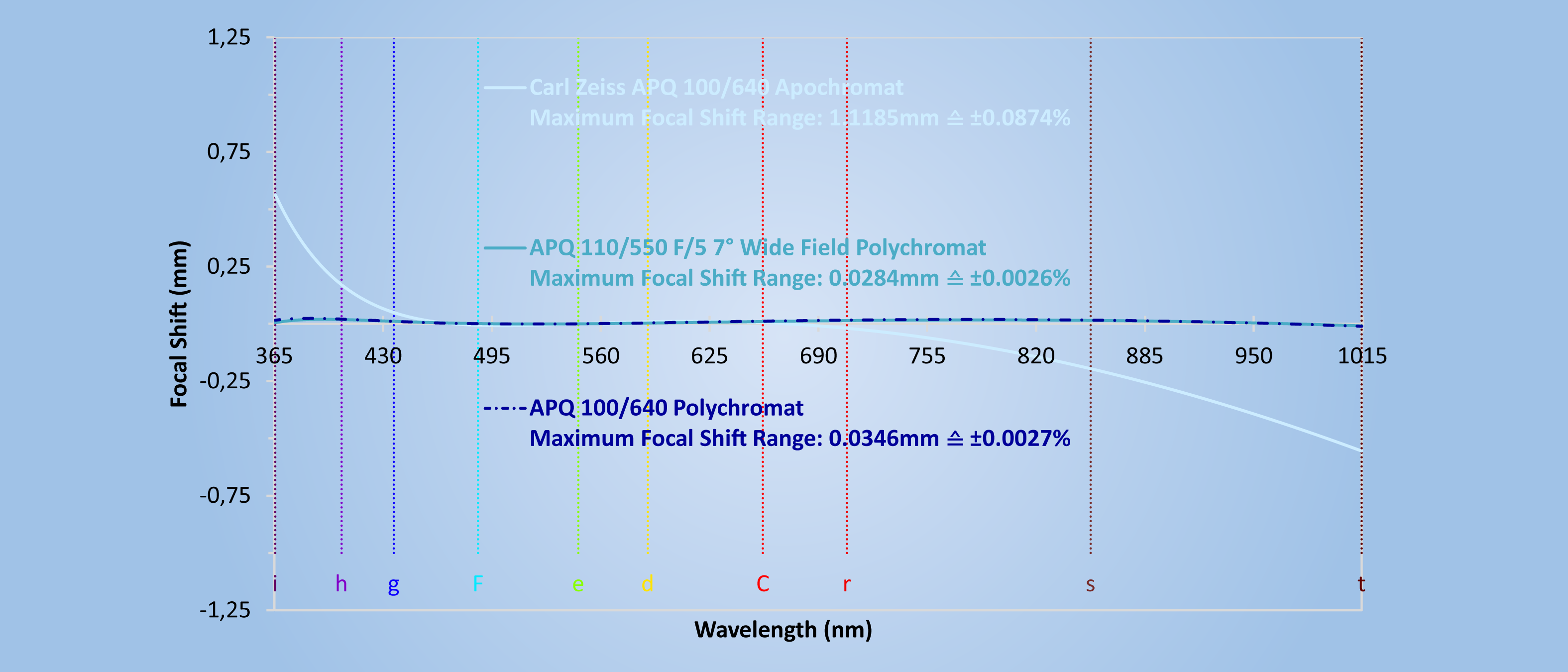
The optical system reaches thermal equilibrium quickly, while the cell prevents element movement and the associated adverse effects.
The optical system can be precisely collimated with the optical axis of the OTA.
Precision CNC machining of the lens cell, dew cap and telescope tube provides the required high centering accuracy.
Inside the OTA, a defined surface structure and a baffle system, combined with an antireflective coating on all internal surfaces, effectively suppress stray light and tube reflections.
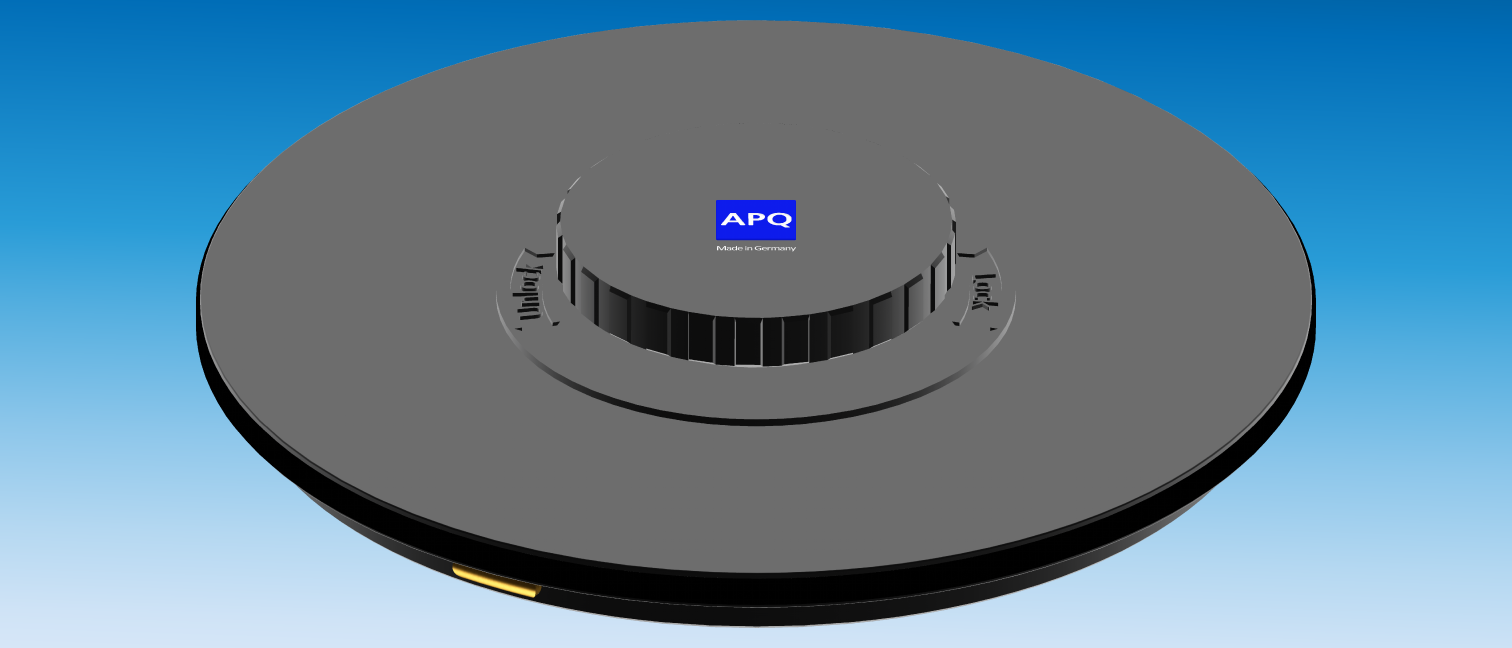
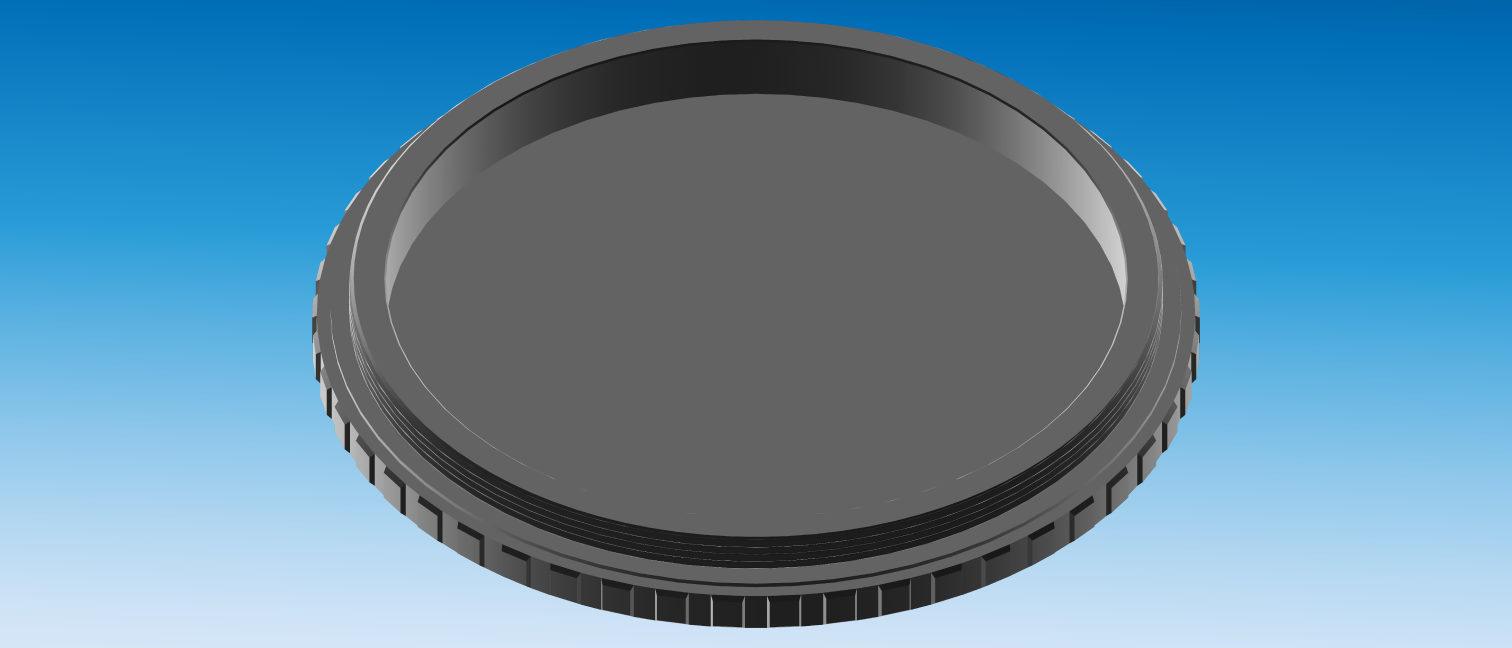
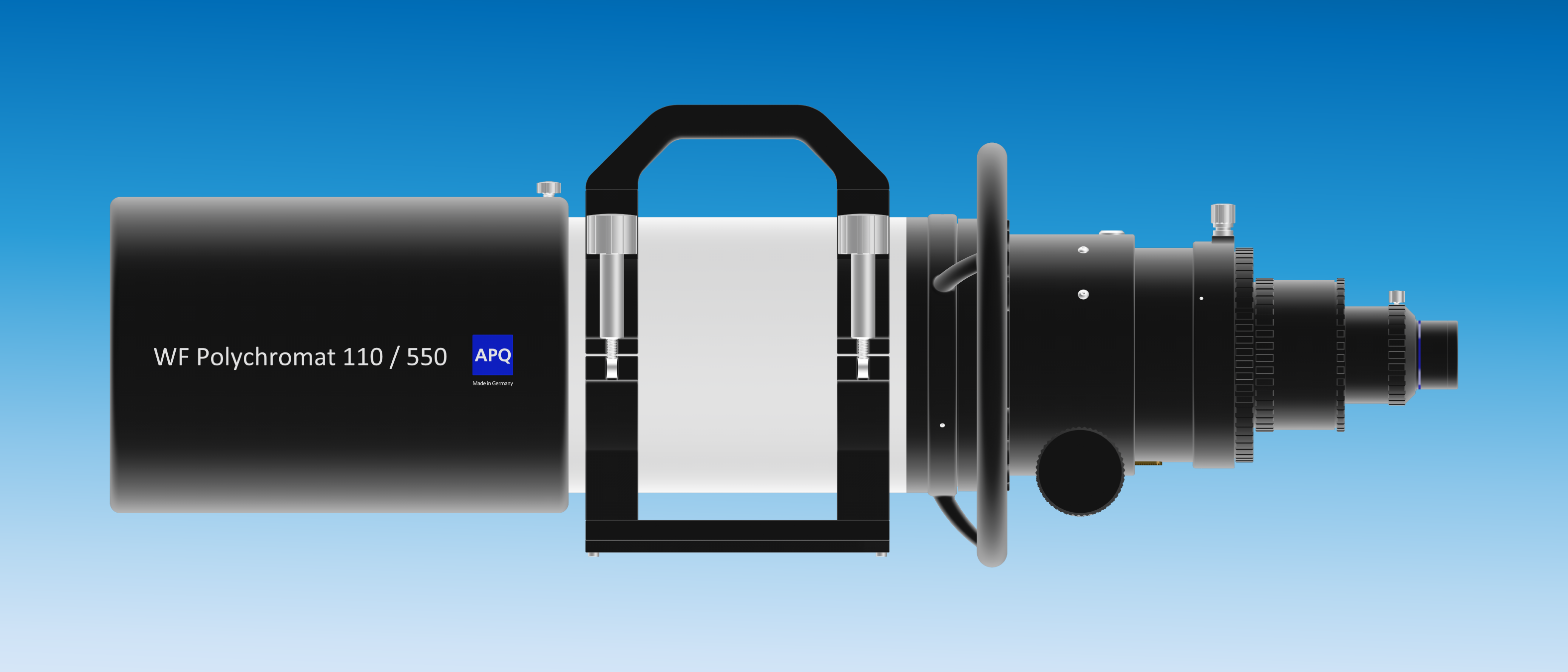
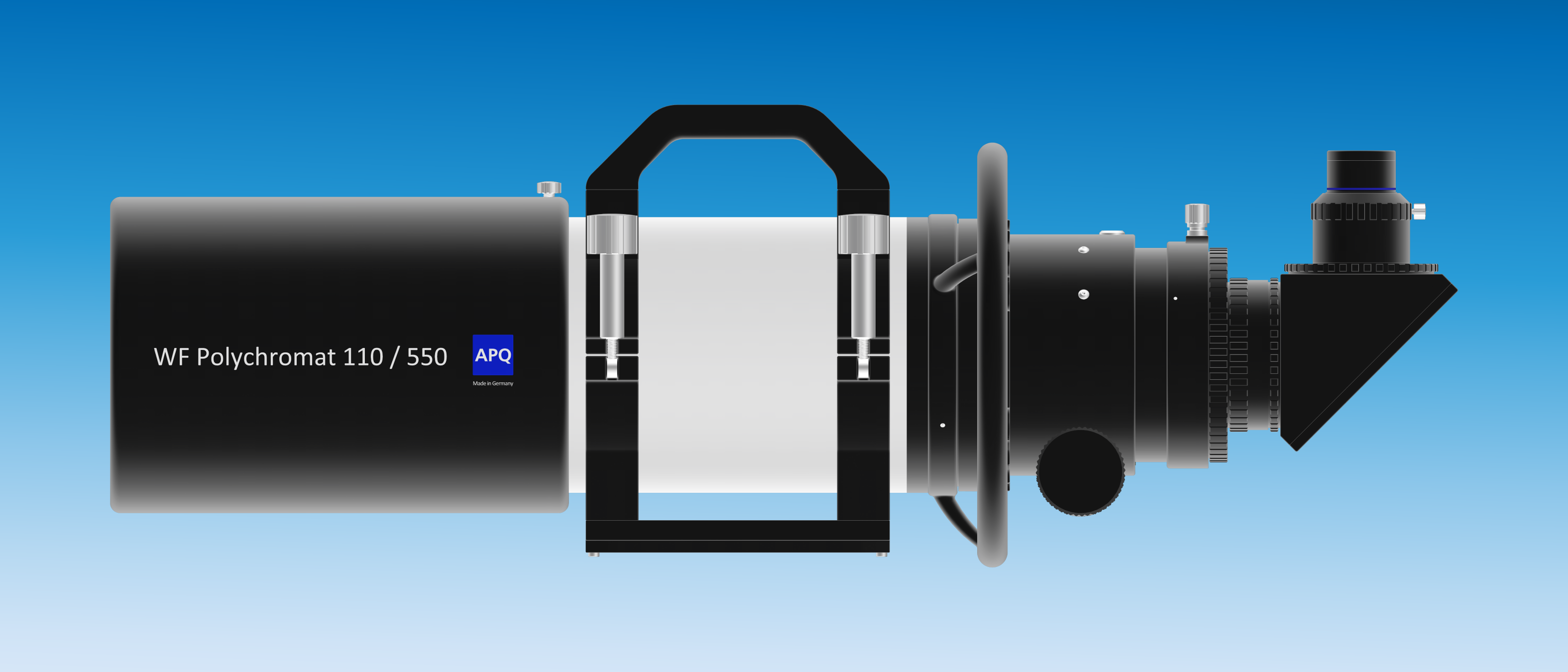
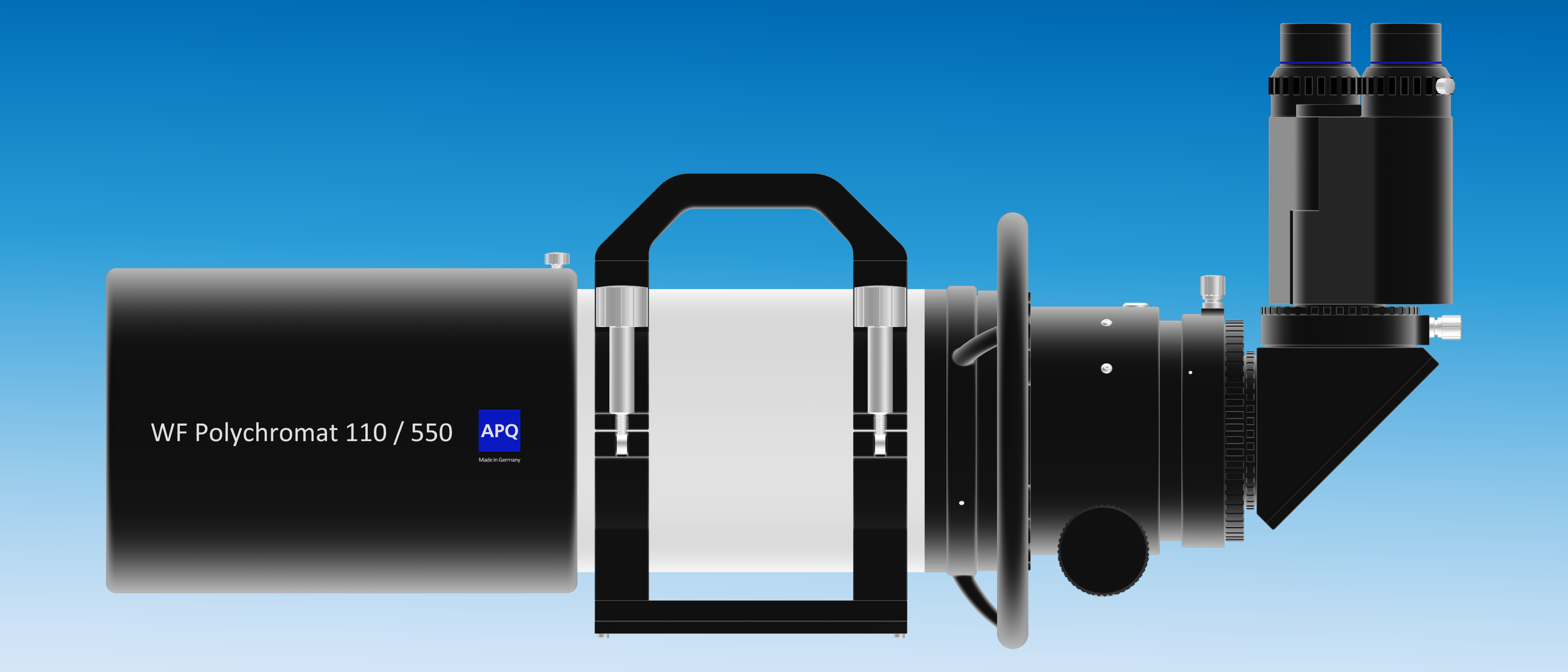
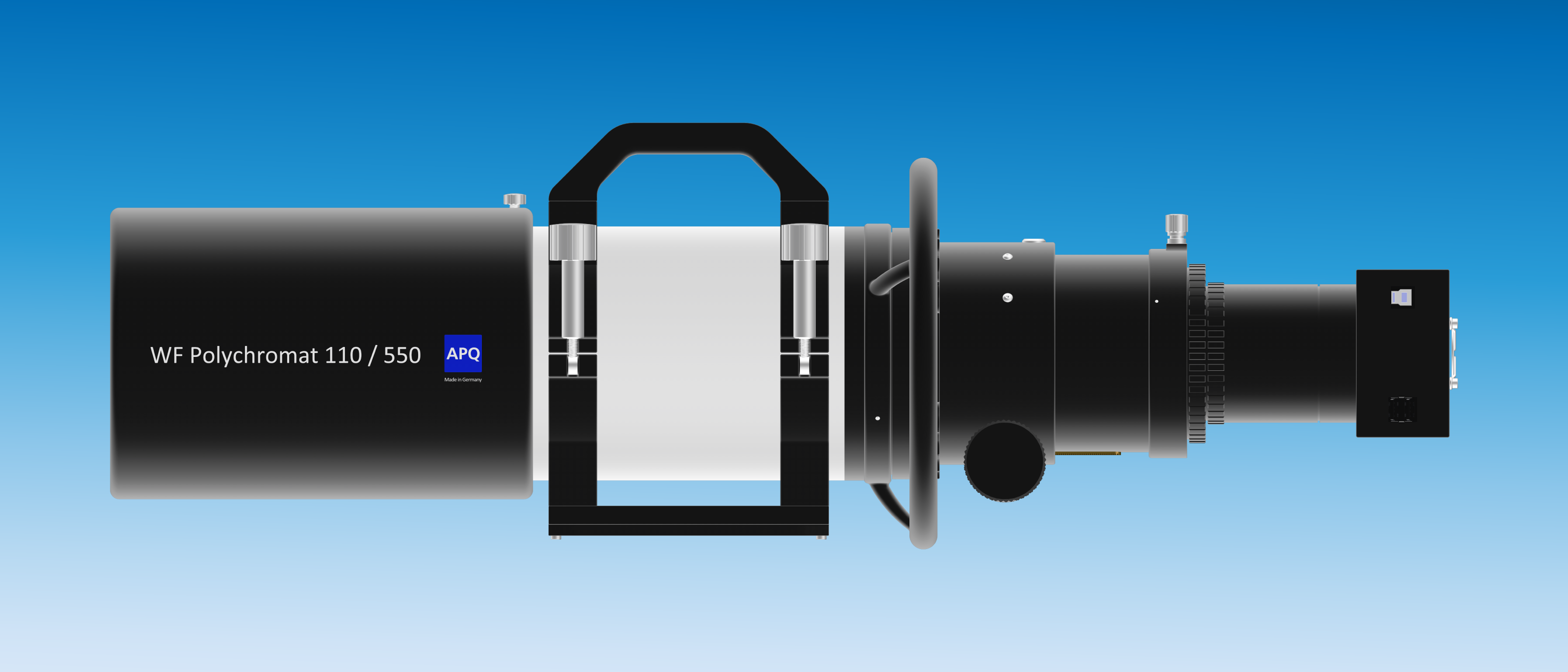
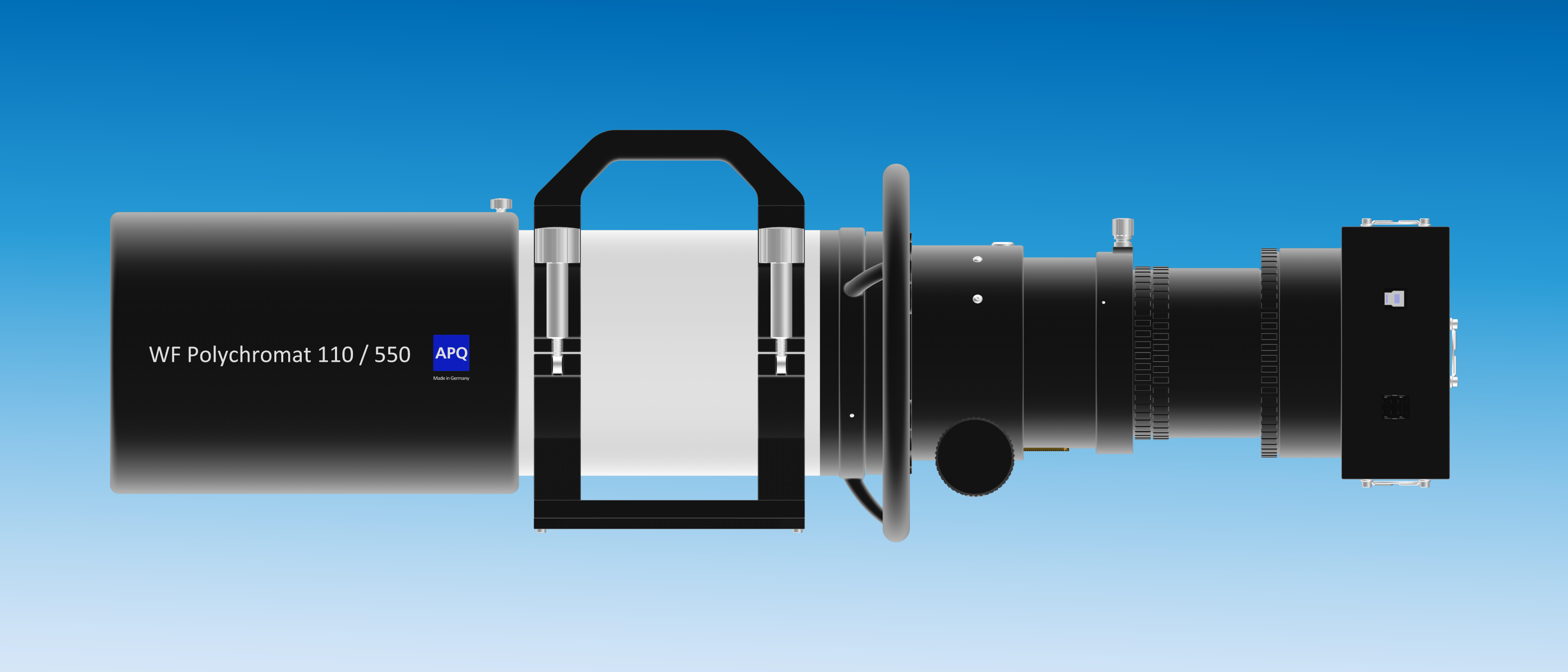
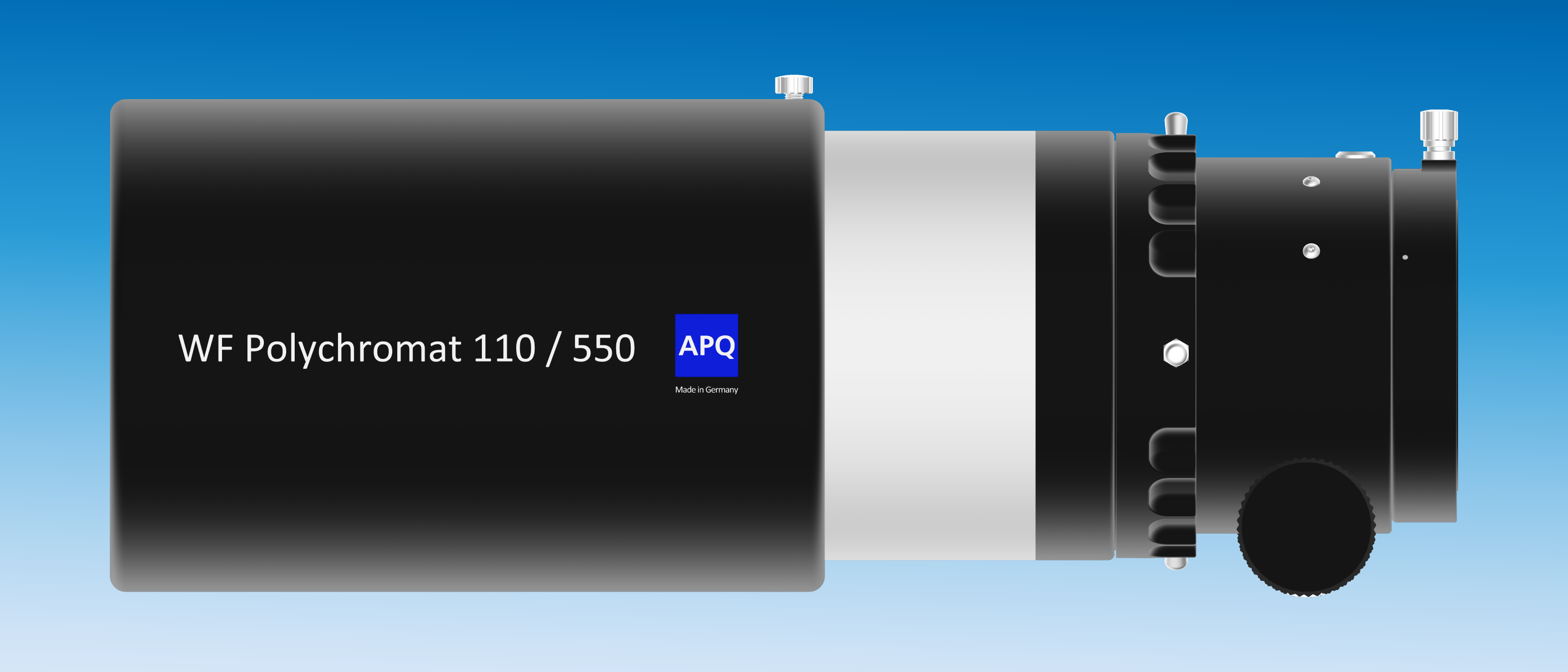
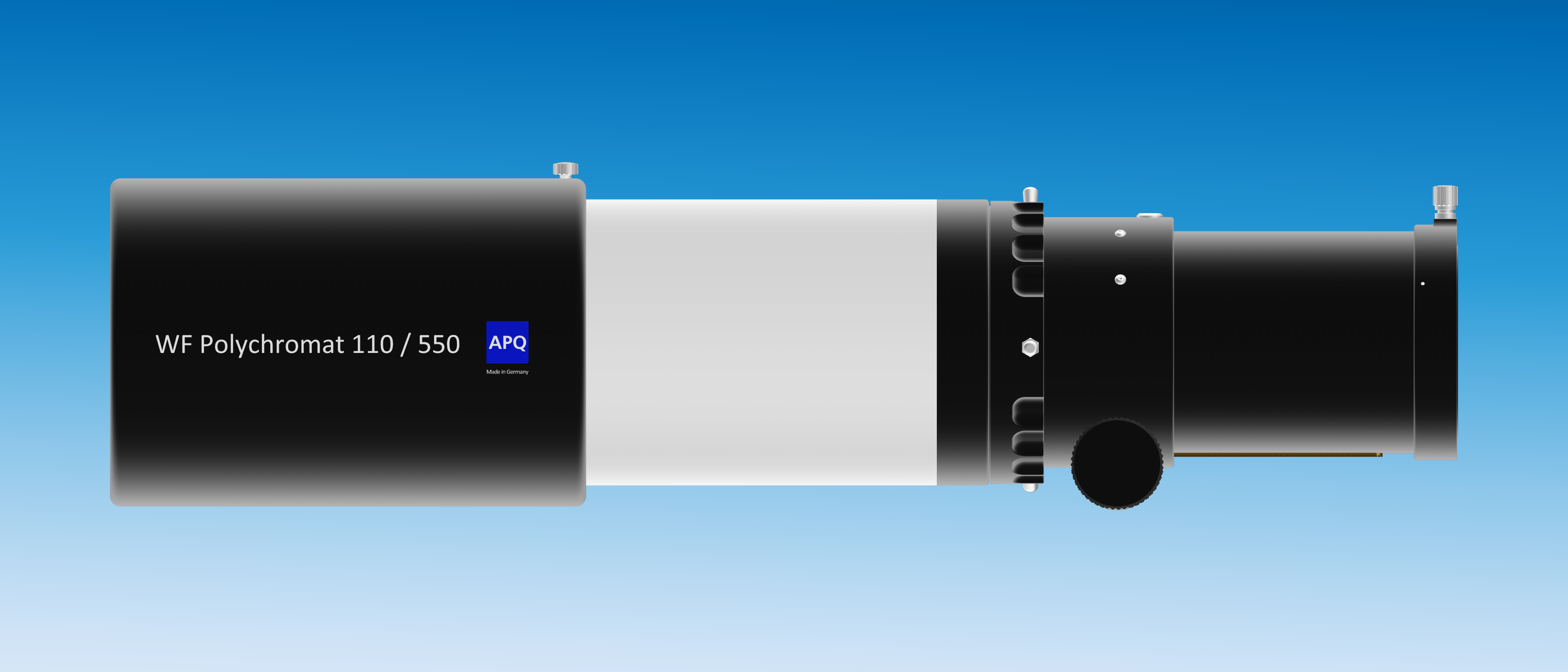
The dew cap provides more than 100 mm of travel, can be locked in any position and is designed for the Wide Field Polychromat's maximum 7 ° field. The dew cap carries the designation WF Polychromat 110/550, the APQ brand logo and the country-of-origin marking Made in Germany.
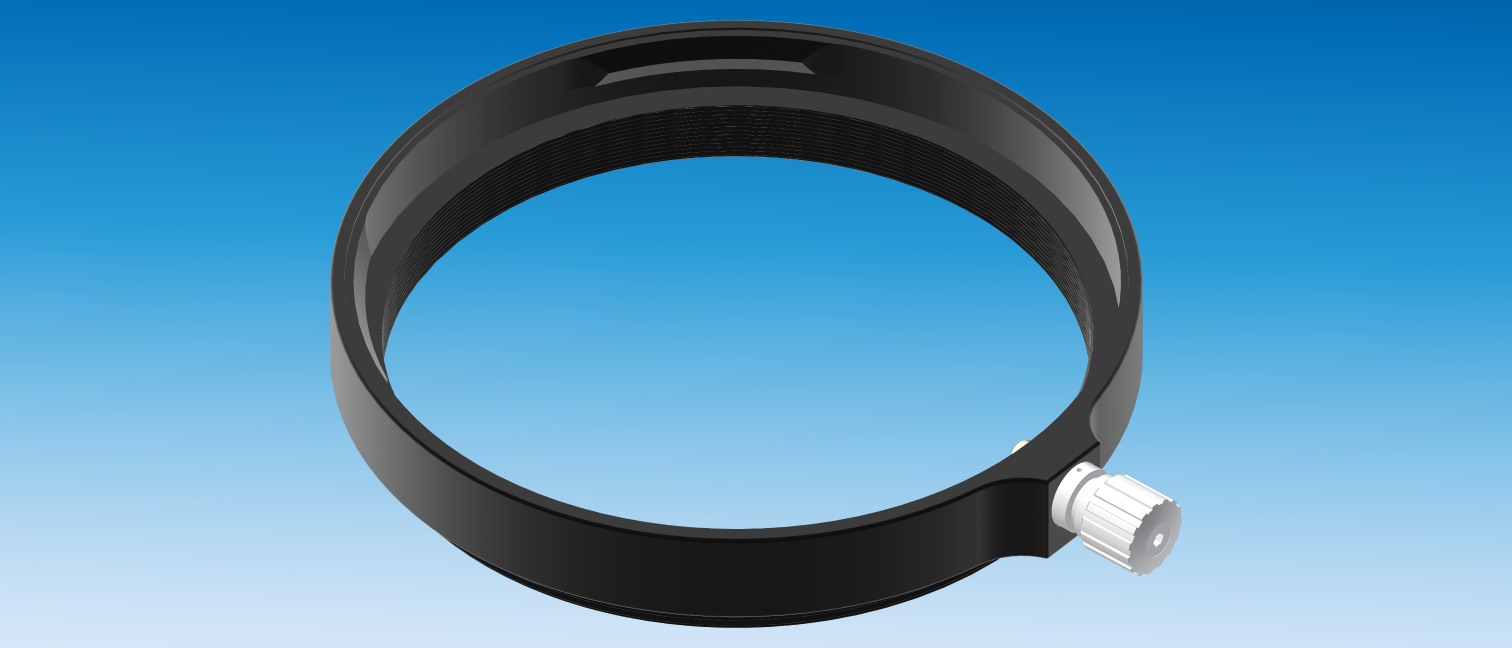
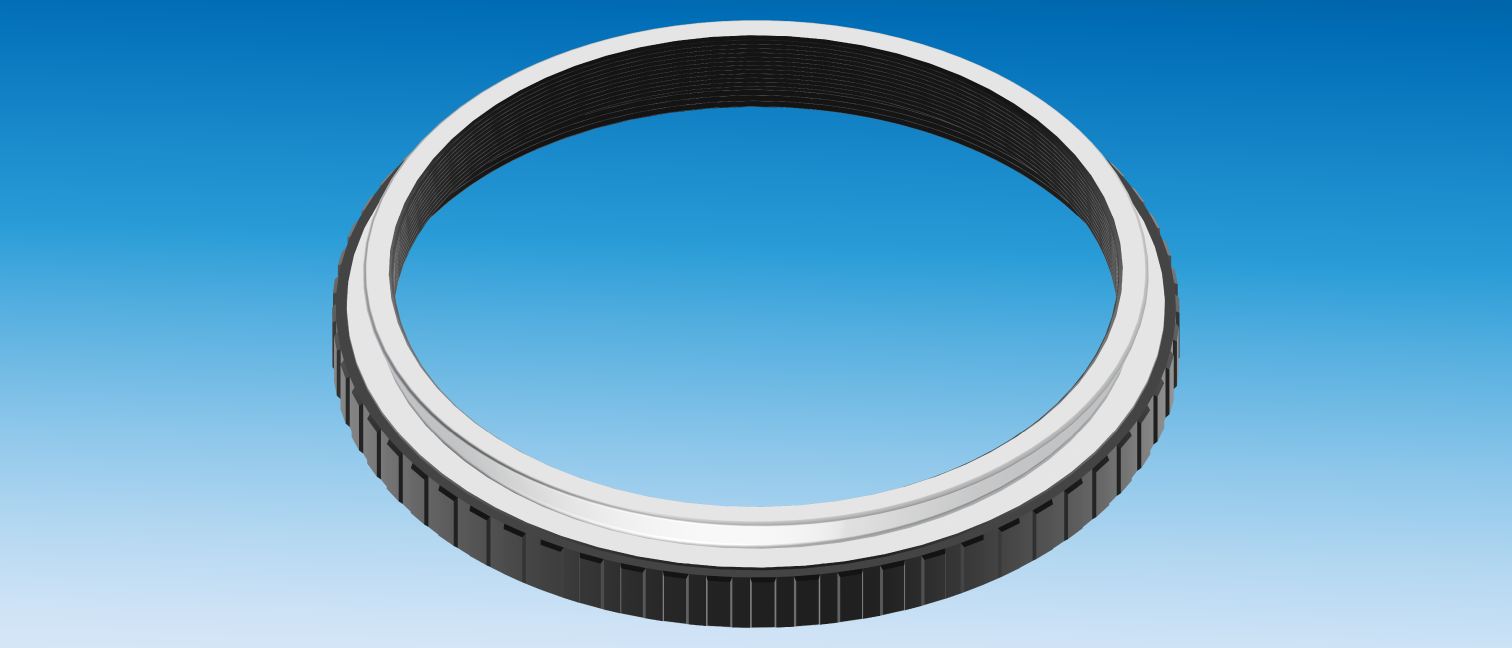
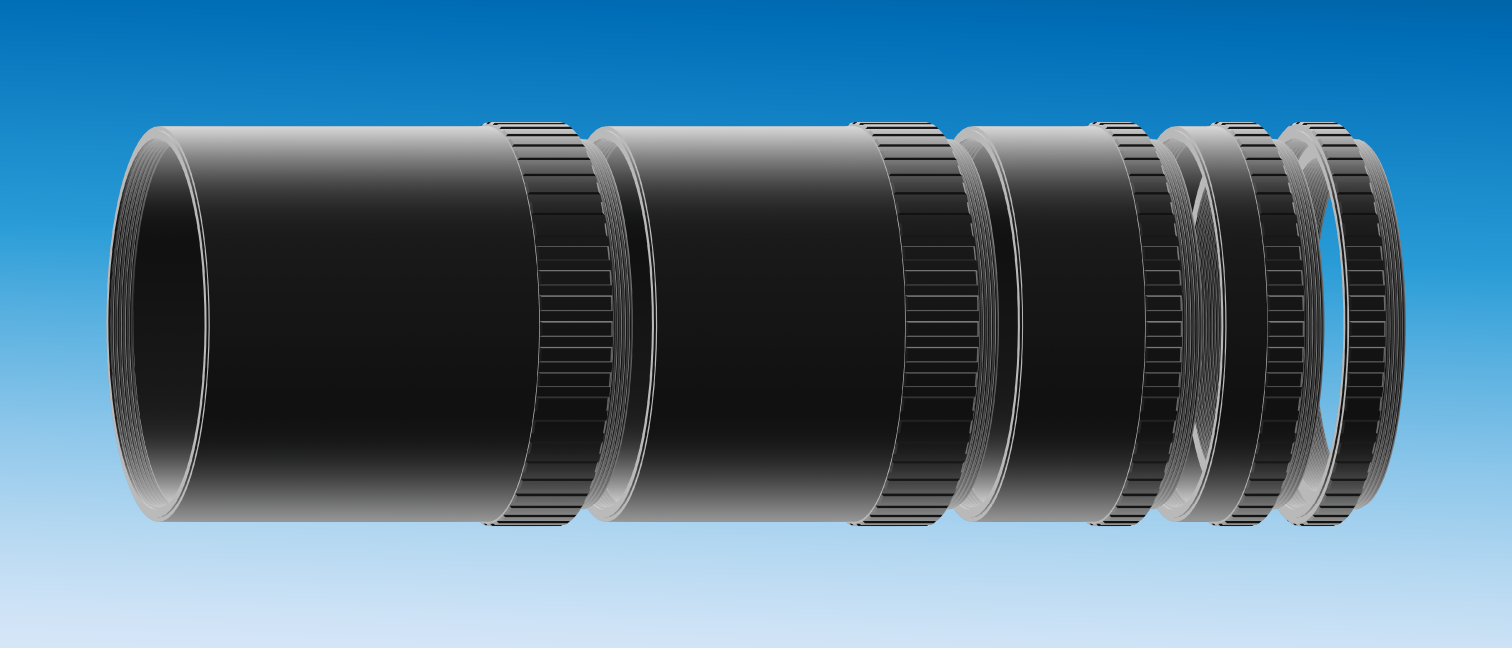
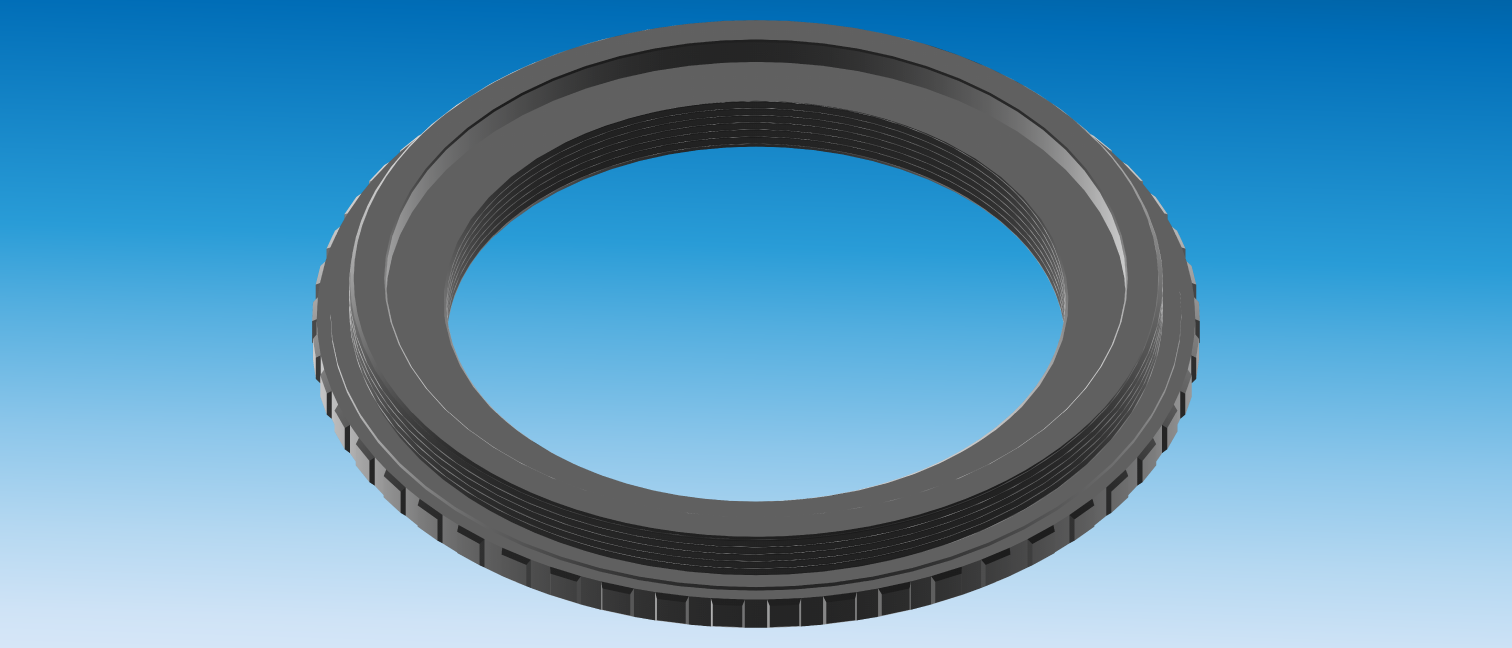
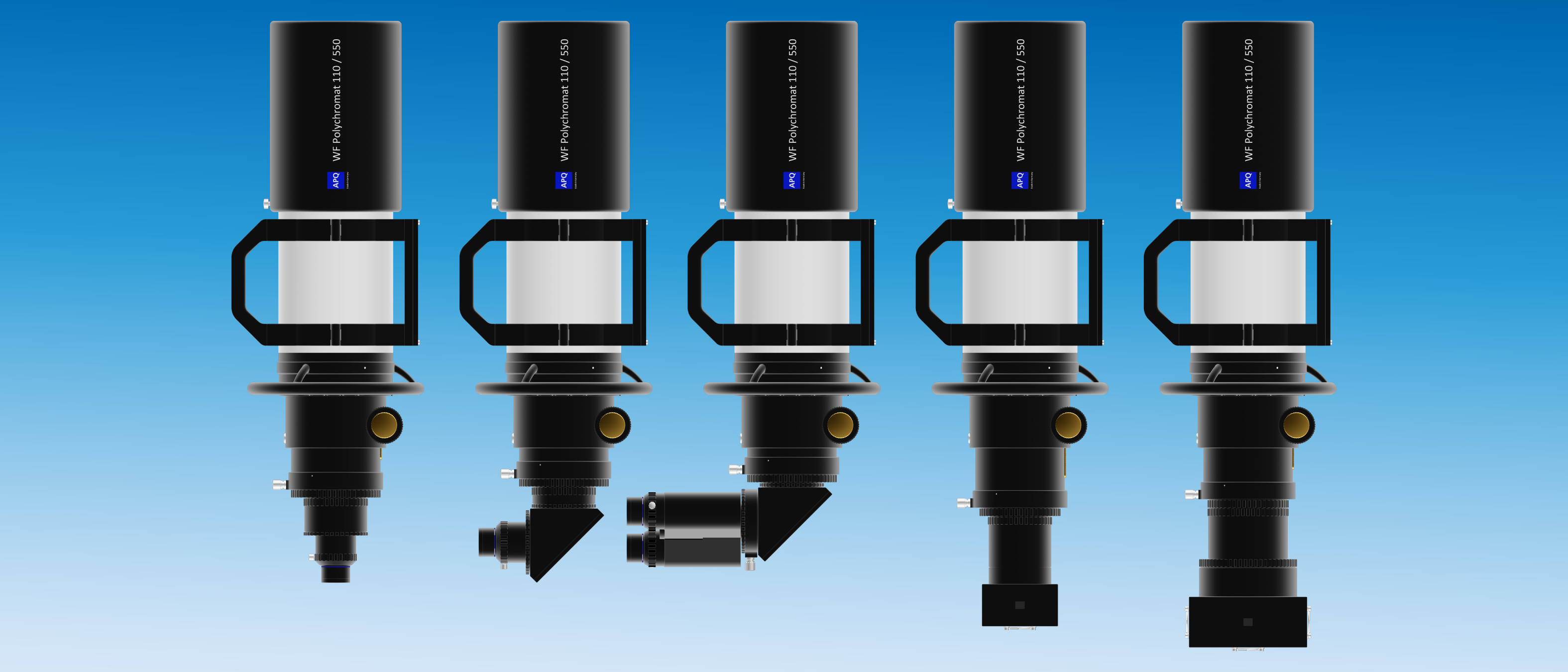
At the rear of the refractor, a Feather Touch FTF3545 focuser from Starlight Instruments is fitted with an APQ Quick Changer using the S88 dovetail-ring system for attaching adapters and components.
The Feather Touch focuser rotates through 360 ° and can be positioned as required. Its dual-speed coarse/fine focusing mechanism provides a 10:1 reduction ratio.
The OTA's distinctive color sets it apart from conventional white finishes and gives the APQ WF Polychromat an instantly recognizable appearance.
The APQ 110/550 Fluorite Wide Field Polychromat is a premium refractor for demanding visual observation and astrophotography.
Current engineering refinements
The current version of this model benefits from an optimized compensation lens cell, an advanced collimation concept and an improved quick-change system with an additional clamping ring for precise position-angle adjustment and increased mechanical stiffness.
(theoretical)
(theoretical)
(theoretical)
(theoretical)
(theoretical)
(exit pupil 6 mm – 0.33 mm)
(individual colors such as cream white or black velvet are possible by arrangement)
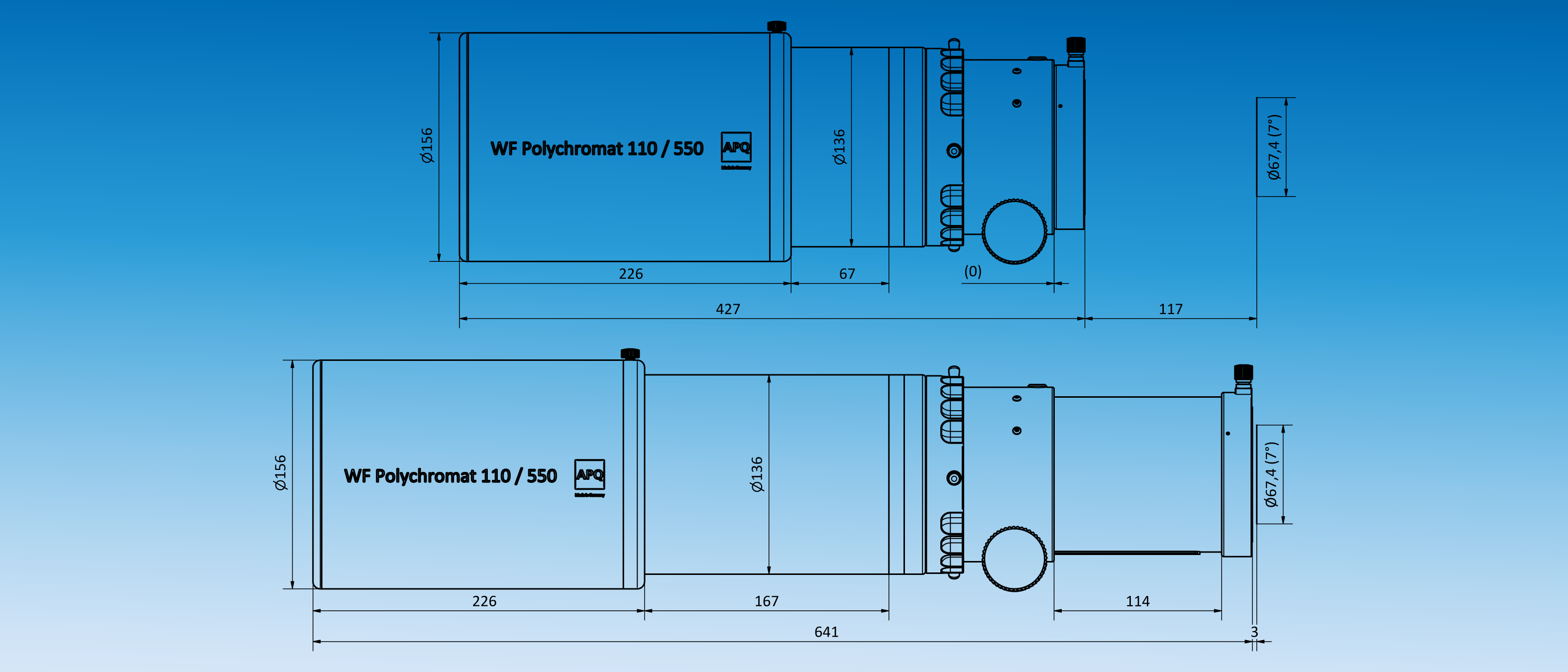
(dew cap and focuser retracted / extended)